
Clotting basics
What is haemostasis?
Learn how blood vessels, platelets and clotting factors work together to limit blood loss, and where topical haemostats fit.
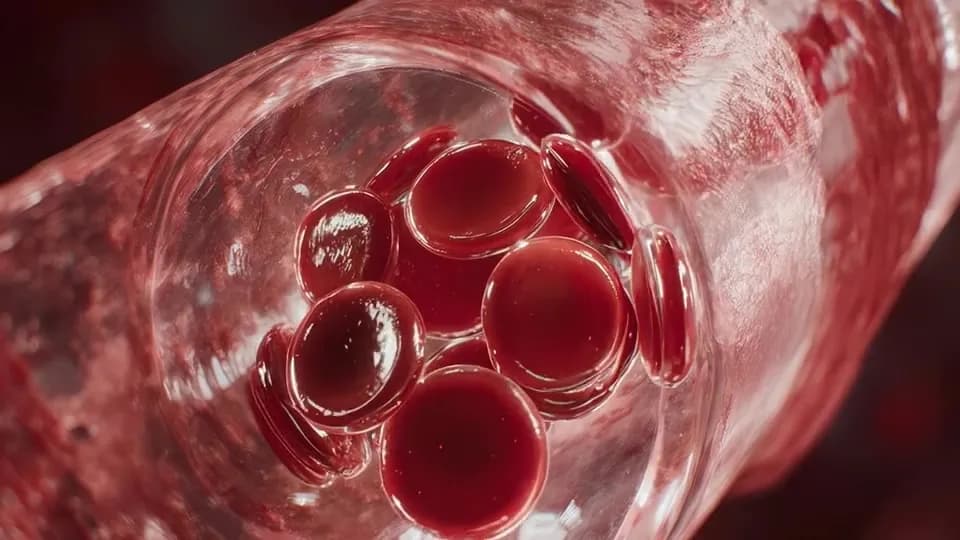
See red blood cells in motion- Vessel responseThe vessel narrows near the injury.
- Platelet plugPlatelets gather and form a temporary plug.
- CoagulationThrombin converts fibrinogen into fibrin.
- Fibrin clotA fibrin network reinforces the plug.
These responses overlap.
The vessel responds
Haemostasis is the process that limits bleeding after a blood vessel is damaged. The vessel can narrow at the injury, reducing local blood flow while platelets and clotting proteins begin to act.
Platelets form a plug
Platelets are small cell fragments in the blood. They attach at the injury, become activated and recruit other platelets. This creates a temporary plug over the break in the vessel.
Fibrin strengthens the plug
Coagulation involves a series of reactions between clotting proteins. One result is the production of thrombin, an enzyme that converts soluble fibrinogen into fibrin. Fibrin forms a network that reinforces the platelet plug.
These responses overlap. A useful way to remember them is that the vessel limits flow, platelets build the initial plug and fibrin gives it more stability.
Where topical haemostats fit
A topical haemostat is a material or agent used at a bleeding surface. In surgery it can serve as an adjunct to the team’s bleeding-control methods. Its material and intended use are defined in the documentation for that product.
Red blood cells in motion.
Watch red blood cells move through a vessel. The diagram above shows how platelets and fibrin help form a clot.
For professional education and procurement. Consult the current product instructions for use for clinical decisions.